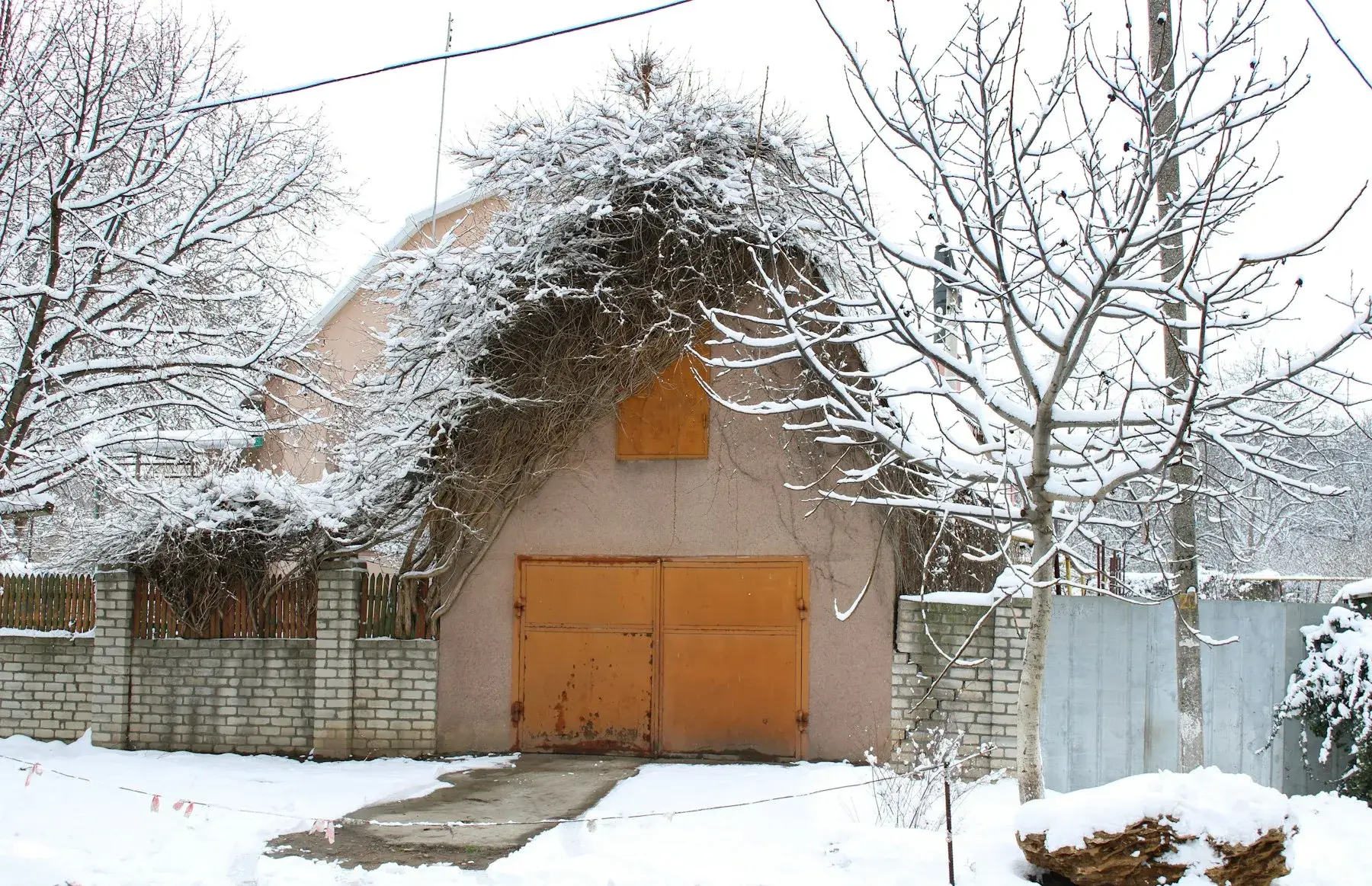
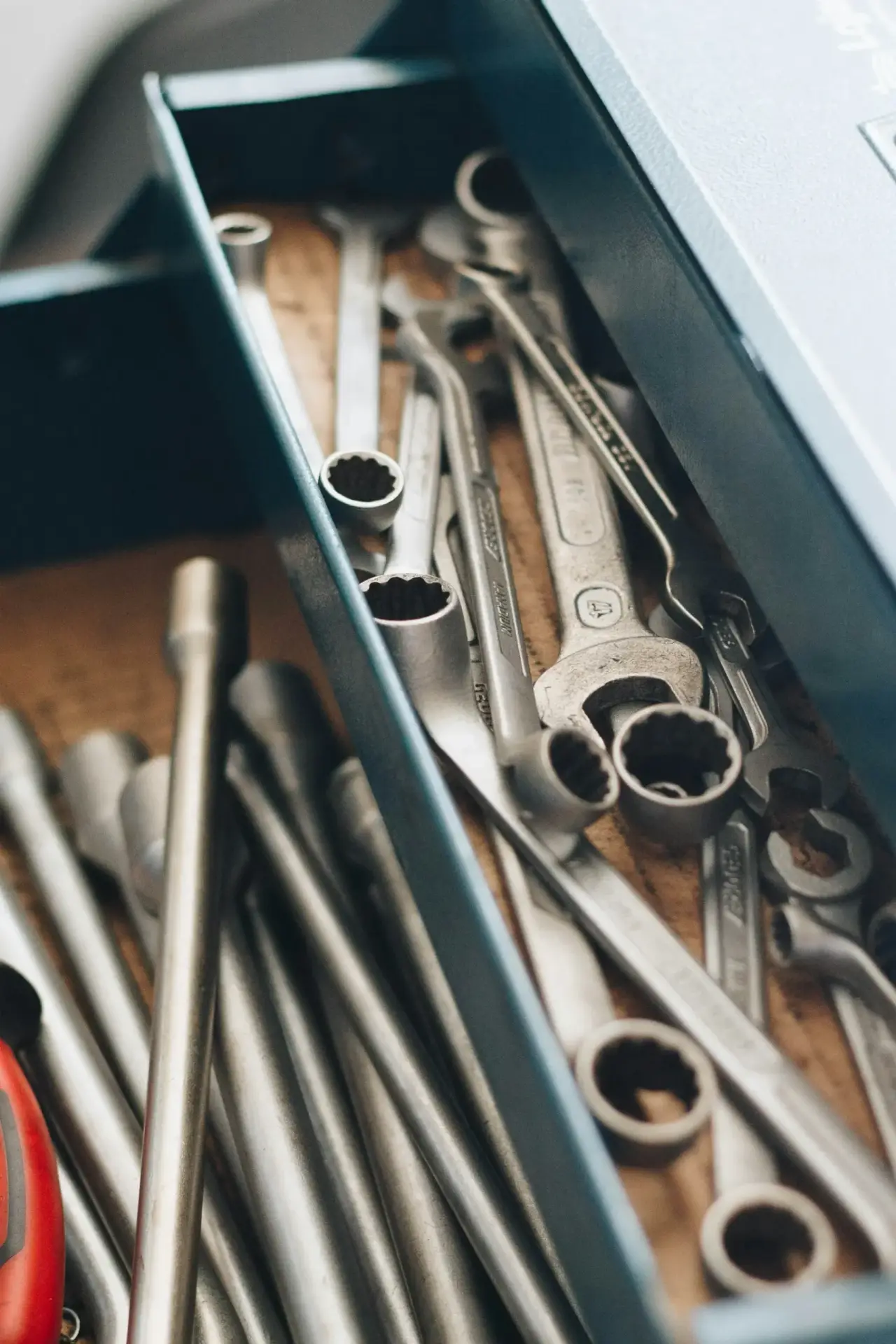
Listen for the bang first
If you heard a bang from the garage, sometime in the night or when you hit the button, stop here. A spring has snapped and the door is now dead weight. Do not keep pressing the opener; it will strip the drive gear and turn one repair into two. Look above the door: a torsion spring with a visible gap of an inch or two in the coil is broken. Call for a tech and say the door size.
Frozen to the floor
On a cold morning after a wet day, the rubber bottom seal freezes to the concrete. The opener pulls, the door does not budge, and the opener gives up. Pull the red release cord, lift the door a few inches by hand to break the ice, reconnect, and run it. Spread a little salt or sand along the line where the seal sits and it will not happen again this week.
Thick grease and dry rollers
Grease and old lubricant stiffen in the cold. The door moves, but slowly and with a lot of noise, and the opener may reverse because it thinks it hit something. A proper garage door lubricant (silicone or lithium, not WD-40) on the hinges, rollers and springs in the fall prevents this. If it is already stiff, a tune up fixes it in forty minutes.
The force limit is too low
Openers have a setting for how hard they push before they decide something is wrong. A door that is a little stiffer in winter can trip it. A small adjustment, a quarter turn on older units or a menu setting on newer ones, usually solves it. If you have to turn it up a lot, the door is unbalanced and the springs need a look.
A capacitor that cannot start in the cold
Older openers with a tired starting capacitor hum but do not turn, especially when it is cold. The capacitor is a $190 to $320 repair on a unit worth fixing. On a builder grade chain drive from 2008, that money is better spent toward a new belt drive with battery backup, and the tech will tell you which case you have.
If you are past the easy answers, the techs we refer handle garage door spring repair in Boise the same day in most cases. For the background on this topic, see the US Department of Energy’s weatherizing guidance.
Frequently asked questions
Can I use WD-40 on my garage door?
No. It strips grease and attracts dust. Use a silicone or lithium garage door lubricant.
How cold does it have to be to break a spring?
Springs that are near the end of their cycle life break in the first cold snap, often around 10 degrees or below. A spring with life left in it handles cold fine.
Why does my door only stick on the first open of the day?
Frozen seal or stiff lubricant. Both are easy fixes.
Should I leave the door disconnected if the opener struggles?
Only if you can lift it easily by hand. If the door is heavy to lift, the springs are the problem and the opener is not the cause.
Is a frozen door covered by any warranty?
No, but the fix is free. Break the ice by hand and salt the line.
When should I call a tech?
After a bang, if the door is crooked, if it is heavy to lift by hand, or if the opener hums and does nothing after you have checked the seal and the release.